Fake Ingredients: At What Point Did Food Stop Being Food?
There was a time when food had a pretty simple job: feed people. That was it. Not survive on a shelf until the collapse of civilization, glow radioactively orange while claiming to be “natural,” chemically imitate strawberries without touching an actual strawberry, contain 47 ingredients nobody can pronounce, survive cross-country shipping better than most marriages, or require Google, ChatGPT, and a chemistry professor just to understand dinner.
And yet… here we are. Walking through grocery stores packed with products that look less like food and more like laboratory experiments with marketing departments. Honestly, at some point modern food conversations started sounding less like agriculture and more like deleted scenes from Soylent Green.
Now before somebody screams, “Relax Chief, dinner isn’t secretly people,” calm down. That’s not the point. The reason Soylent Green became legendary wasn’t just because of the ending. It was because the movie tapped into something people still feel today: the fear that food systems can become so industrialized, engineered, and disconnected from reality that consumers no longer know what they’re actually eating anymore.
And if we’re being honest, people aren’t crazy for asking that question now. Not after bioengineered ingredients, lab-grown meat, hyper-processed food systems, chemical stabilizers, artificial flavor engineering, synthetic dyes, “meat glue,” and ingredient labels that sound like military radio traffic.
Because modern food stopped being about biological function a long time ago. Now, most of it is engineered around scalability, shelf life, addictive flavor response, transport durability, manufacturing efficiency, cost reduction, and repeat consumption. The body deals with the consequences later.
And firefighters notice this stuff fast because we spend years watching what happens when the body finally stops compensating for repeated abuse. That perspective changes you. Especially when you realize most people aren’t eating food anymore. They’re eating food products. There’s a difference. A big one.
Somewhere Along The Way, “Technically Edible” Became The Standard
This is the real issue underneath the entire modern food conversation: the standard collapsed. Food used to be judged mostly by freshness, sourcing, simplicity, preparation, and quality. Now, modern food systems often define success by shelf longevity, scalability, addictive repeat purchasing, ingredient cost reduction, transport durability, manufacturing speed, and hyper-palatability.
Those are very different priorities. And look, innovation itself isn’t evil. Refrigeration was innovation. Food safety protocols matter. Preservation can absolutely help populations. But somewhere along the line, food engineering stopped asking, “How do we support the human body?” and started asking, “How cheaply and efficiently can we manufacture this?”
That shift changed everything. Because grocery stores are now filled with emulsifiers, stabilizers, artificial dyes, synthetic sweeteners, modified starches, chemical preservatives, bioengineered ingredients, flavor enhancement systems, and ultra-processed oils. Most consumers have absolutely no idea how much of this stuff they’re eating daily. Not because they’re stupid. Because the system normalized it slowly.
That’s how normalization always works. Nobody wakes up one morning and says, “You know what sounds fantastic? Industrialized synthetic food architecture.” It happens gradually. One shortcut at a time.
The Ingredient Label Shouldn’t Read Like A Hazmat Report
Firefighters see hazardous material labels all the time. And honestly, some modern food packaging is starting to feel weirdly familiar. You pick up a “healthy” snack and suddenly you’re reading potassium sorbate, sodium benzoate, carrageenan, modified food starch, mono and diglycerides, xanthan gum, artificial flavor compounds, emulsifiers, stabilizers, and bioengineered food ingredients.
At some point you stop asking, “What flavor is this?” and start asking, “Should I call dispatch first?” Now before the internet melts down, no — every additive is not instant death. That’s not the argument. The real question is why modern food increasingly requires industrial architecture in the first place.
That’s the conversation nobody wants to have honestly. Because people aren’t just eating beef, chicken, potatoes, vegetables, rice, and sauces. They’re increasingly eating engineered systems designed around shelf life, manufacturing, texture manipulation, addictive flavor responses, and chemical stability. That distinction matters more than most companies want consumers thinking about.
“Contains Bioengineered Food Ingredients” Is No Longer Rare
This is where people start getting uncomfortable. Because bioengineered food isn’t some futuristic sci-fi theory anymore. It’s already here. You literally see labels now saying, “Contains Bioengineered Food Ingredients.” And people have every right to ask questions about that.
Not because science is evil. Not because innovation is evil. Because transparency matters. The problem isn’t technology. The problem is that modern food engineering moves extremely fast while long-term human biological understanding moves much slower. That gap should concern people reasonably. Not hysterically. Reasonably.
Because consumers are increasingly staring at products that are chemically optimized, structurally engineered, lab-developed, manipulated for scalability, and disconnected from natural food systems. And they’re quietly asking, “At what point did food stop being food?” That question doesn’t make somebody anti-science. It makes them awake.
Yes, “Meat Glue” Is Real — And That Alone Should Probably Make People Pause For A Minute
Alright. Let’s talk about the internet’s favorite horror movie ingredient. Yes, “meat glue” is real. It’s called transglutaminase, and it’s used to bind smaller meat scraps together into larger cuts that resemble intact steaks or filets. So when people online joke, “That steak might’ve been assembled like IKEA furniture,” they’re not completely wrong.
Now, does this mean every steakhouse in America is secretly crafting Frankenstein filets in an underground bunker? No. The internet exaggerates everything. But the larger issue underneath it matters: modern food systems increasingly engineer products around appearance, cost reduction, manufacturing efficiency, waste reduction, and scalability instead of simplicity, ingredient transparency, and biological familiarity.
And honestly, consumers are not crazy for being uncomfortable with that shift. People want food they recognize. Food they understand. Food that still resembles… well… food. That’s not paranoia. That’s common sense.
Lab-Grown Meat Is Here — Whether People Are Comfortable With It Or Not
Now we get to the conversation that makes the internet lose its collective mind: lab-grown meat. Yes, it’s real. And yes, some states have already started restricting or banning it.
Now before people start acting like firefighters are hiding from mutant chicken nuggets in underground bunkers, nobody is claiming lab-grown meat automatically equals catastrophe. There simply is not enough long-term widespread human consumption data yet to make sweeping claims. That’s the honest answer.
But consumers absolutely have the right to ask: What are the long-term biological effects? How processed is too processed? At what point does food become biotech? How disconnected from nature are we willing to get? Are we prioritizing manufacturing efficiency over biological understanding?
Those are intelligent questions. And honestly, the food industry gets really uncomfortable when consumers start asking them. Because modern food culture increasingly operates under, “Can we manufacture it?” Fire Dept Meals believes another question matters too: “Should humans repeatedly eat this for the next 30 years?” That’s a very different philosophy.
The Modern Food System Already Conducted One Giant Experiment On Humanity
And honestly, the results aren’t exactly reassuring. Over the last several decades we watched obesity explode, metabolic dysfunction rise, chronic inflammation become common, diabetes skyrocket, digestive issues normalize, energy crashes become routine, chronic illness increase, and people become increasingly disconnected from real food.
Now obviously, human health is complex. No single ingredient explains everything. But pretending food quality plays no role is biologically absurd. Because the body responds to repeated inputs. Repeatedly. For years. That’s how physiology works.
Unfortunately, modern food systems increasingly optimize for addictive reward responses, hyper-palatability, chemical stimulation, low-cost manufacturing, and convenience — not recovery, resilience, metabolic support, or biological function. Those are very different priorities. And firefighters spend enough years responding to emergencies to know the body eventually collects on repeated abuse. Maybe not immediately. But eventually.
The Food Industry Normalized Feeling Like Garbage
This might honestly be the craziest part of the whole thing. People now think it’s normal to feel exhausted constantly, crash after meals, rely on caffeine to function, feel inflamed daily, have terrible digestion, feel mentally foggy, recover poorly, and feel physically older than they are.
That isn’t thriving. That’s compensation. The body is incredibly adaptable, but adaptation doesn’t always mean health. Sometimes adaptation simply means, “the body figured out how to survive repeated overload.” That’s different.
Modern food culture normalized it because fixing the issue would require admitting the system itself drifted too far away from biological common sense. That conversation threatens profit margins. So instead consumers get flashy packaging, fake wellness marketing, “healthy” processed junk, influencer nutrition nonsense, and engineered convenience food disguised as balance. Meanwhile everybody feels terrible and acts like that’s just adulthood now. That’s insane.
Fire Dept Meals Was Built Because We Got Tired Of Watching Fake Food Become Normal
Fire Dept Meals did not start because we wanted to become “health influencers.” Honestly, that sounds exhausting. This company came from years of watching poor recovery, inflammation, chronic exhaustion, fake healthy marketing, ingredient shortcuts, ultra-processed junk, convenience culture, and people physically running on fumes.
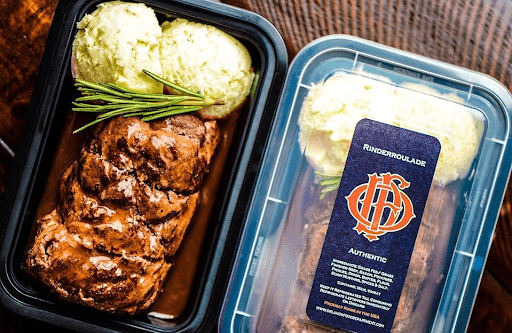
Eventually you stop being able to ignore the pattern. So we built meals differently. Not perfectly. Not fearfully. Not pretending to be doctors. Just intentionally. Real proteins. Scratch-made sauces. Controlled ingredients. Reduced unnecessary junk. Less laboratory engineering. More actual food.
Because we believe something absolutely ridiculous apparently needs to be said out loud again: food should still look like food. Wild concept. We know. But when consumers increasingly need Google, Reddit, ChatGPT, YouTube investigations, documentaries, and a chemistry dictionary just to understand dinner, maybe the system drifted a little too far away from the farm.
This Isn’t About Fear — It’s About Paying Attention
Fire Dept Meals is not saying all processed food is evil, science is evil, innovation is evil, or everybody should panic inside grocery stores. That’s not reality. This is about awareness, transparency, ingredient integrity, and biological common sense.
Because modern food engineering is moving far faster than long-term human biological understanding. That deserves honest conversation. Especially when consumers are increasingly eating products built more around scalability, engineering, manufacturing, shelf life, and chemical optimization than actual biological support.
And honestly, people aren’t crazy for wanting food that still feels real.
Most Food Companies Ask: “Can We Manufacture It?”
We ask: “What does this do to the human body over time?” That’s the difference. Fire Dept Meals was never built around maximizing shelf life, engineering addictive food systems, chemical architecture, laboratory meals, or fake healthy branding.
We build meals around biological function. Because the body still has to process everything repeatedly. And maybe… just maybe… the future of food shouldn’t feel like something people are afraid to question.